

By SK | TheGlobalNews
Prime Minister Narendra Modi launched the “Nasha Mukta Yuva for Viksit Bharat Sankalp Abhiyaan”—a nationwide, youth-led anti-drug movement aimed at eliminating substance abuse and fostering a healthier, self-reliant generation.
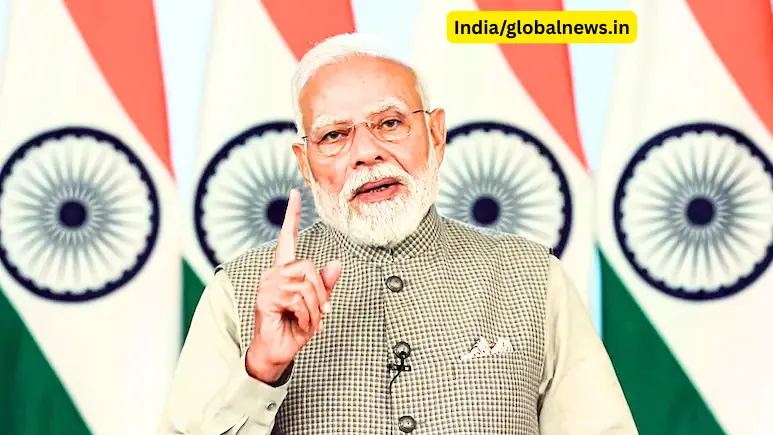
Speaking virtually from New Delhi to over 10,000 locations across the country, PM Modi addressed an audience of over one crore young participants who took the national Nasha Mukti (Drug-Free) pledge. The initiative frames substance abuse prevention not merely as an individual health goal, but as a crucial pillar for achieving a Viksit Bharat (Developed India) by 2047.
1. The Announcement
The event marked the launch of a 100-week sustained Jan Bhagidari (public participation) campaign organized by the Ministry of Youth Affairs and Sports in collaboration with MY Bharat (Mera Yuva Bharat), the National Service Scheme (NSS), educational institutions, civil society, and over 125 spiritual organizations.
- Event Date: August 2, 2026.
- Format: Virtual nationwide address connecting youth clubs, schools, colleges, and university campuses across India.
- Core Objective: Mobilize young citizens to lead a movement against substance abuse through weekly community activities, peer education, and health awareness.
2. Key Messages from PM Modi’s Speech
During his address, Prime Minister Modi emphasized that India’s greatest asset is its young demographic—referred to as the “Amrit Peedhi”—and warned that substance abuse directly threatens personal potential and national progress.
Warning on Drug Abuse
- Distraction from Dreams: PM Modi cautioned that drug addiction creates short-term highs while inflicting long-term damage on individual careers, family stability, and mental clarity. “Drug use disturbs your focus and takes you away from your dreams,” he noted.
- National Security Impact: He highlighted that illicit drug supply chains and trafficking networks are frequently exploited by hostile actors to profit off vulnerability and destabilize social stability.
Message to Youth, Families, and Educators
- Break the Stigma: The Prime Minister urged families not to conceal substance use issues out of fear of social stigma. He encouraged parents to maintain open channels of communication with their children to identify early warning signs—such as sudden behavioral changes or social isolation—and seek professional medical help promptly.
- Role of Educators: PM Modi appealed to teachers and professors to discuss the dangers of substance abuse routinely alongside academic curricula and lead active anti-drug awareness drives on campuses.
- Support for Recovery: He stressed that individuals who successfully overcome addiction display immense resilience and courage, urging society to welcome and support them rather than isolate them.
  +------------------------------------------------------------------------+
  |              NASHA MUKTA YUVA ABHIYAAN: AT A GLANCE                    |
  +------------------------------------------------------------------------+
  | • Campaign Duration : 100-Week Sustained Jan Bhagidari Drive           |
  | • Target Cadre      : MY Bharat Volunteers, NSS, Youth Clubs, Colleges  |
  | • Weekly Cadence    : Sunday Community Drives (Sports, Walkathons, Art)  |
  | • Primary Goal      : Mobilize Youth as Ambassadors for a Drug-Free India|
  +------------------------------------------------------------------------+
3. Why the Campaign Matters
Substance use disorder remains a complex public health challenge globally and within developing economies. Preventing drug uptake among young people is essential because early experimentation often coincides with critical stages of cognitive, emotional, and career development.
- Public Health Protection: Beyond personal health impacts, substance abuse places significant strain on public healthcare systems, social welfare infrastructure, and emergency response services.
- Focus on Prevention: While law enforcement handles supply-side reduction, public awareness campaigns address demand reduction by countering peer pressure, correcting misinformation, and promoting healthy coping mechanisms.
- De-stigmatization and Rehabilitation: Modern public health frameworks emphasize that people struggling with addiction require medical care, counseling, and social reintegration rather than societal ostracization.
4. Government Initiatives & Enforcement Strategy
The launching of the Nasha Mukta Yuva campaign builds upon existing multidimensional strategies implemented by the Government of India:
Three-Pillar Strategy
- Demand Reduction: Spearheaded by campaigns like the Nasha Mukt Bharat Abhiyaan (NMBA) under the Ministry of Social Justice and Empowerment, alongside the newly launched Nasha Mukta Yuva drive under MY Bharat.
- Supply Reduction & Law Enforcement: Strict measures by the Narcotics Control Bureau (NCB), state police forces, and border security agencies. Official reports indicate that illicit drug seizures between 2014 and 2024 totaled over ₹22,000 crore, reflecting intensified interdiction efforts compared to earlier decades.
- Harm Reduction & Rehabilitation: Expanding access to government-supported De-Addiction Centers (IRCA), tele-counseling helplines (such as National Toll-Free Helpline 14446), and hospital-based treatment facilities.
5. Statistical Context
According to national survey data compiled by the Ministry of Social Justice and Empowerment and the National Drug Dependence Treatment Centre (NDDTC) at AIIMS:
- Demographics: A significant proportion of individuals initiating substance use fall within the 15 to 35 age bracket, underscoring the necessity of school and university-level intervention programs.
- Community Reach: Since the launch of earlier anti-drug flagship drives in 2020, awareness activities have reached over 11 crore citizens across 372 vulnerable districts, including several crore youth and women.
- Mass Mobilization: The August 2, 2026 launch set a single-day benchmark with over 1 crore youth simultaneously taking the Nasha Mukti pledge across 10,000 locations.
6. Expert Perspective: Prevention, Schools, and Families
Public health experts and behavioral psychologists highlight several core principles for sustainable substance abuse prevention:
- Early Intervention vs. Enforcement: While law enforcement deters organized trafficking, community-level prevention reduces the initial desire to experiment. Building resilience and self-esteem during adolescence serves as a strong protective factor.
- The Role of Educational Institutions: Schools and colleges provide structured environments where peer educators, counselors, and faculty can spot signs of distress early and offer constructive outlets like sports, arts, and community service.
- Family Dynamic: Supportive, non-judgmental family environments encourage young individuals to speak openly about mental health struggles or social pressures before turning to harmful coping mechanisms.
7. Public Impact and Campaign Implementation
The Nasha Mukta Yuva for Viksit Bharat Sankalp Abhiyaan is structured around grassroots execution:
- Student Ambassadors: Youth volunteers trained through MY Bharat and NSS serve as peer mentors, conducting outreach in local neighborhoods and educational institutions.
- Weekly Community Activities: Every Sunday over the next 100 weeks, local clubs and institutions will host walkathons, sports tournaments, street plays (nukkad nataks), art competitions, and yoga sessions to promote healthy lifestyles.
- Civil Society & Spiritual Networks: Over 125 spiritual and social organizations are integrating anti-drug messaging into their community gatherings and wellness programs to broaden public reach.
8. What’s Next?
- 100-Week Program Rollout: District-level committees will execute the calendar of Sunday activities across towns and rural blocks nationwide.
- Institutional Anti-Drug Committees: Universities and senior secondary schools are set to form dedicated student-faculty committees to monitor campus environments and organize regular discussions.
- Enhanced Inter-Agency Coordination: Federal enforcement bodies like the NCB will continue expanding state-level units to coordinate with local law enforcement while community drives focus on awareness and treatment accessibility.
Frequently Asked Questions (FAQs)
What did PM Modi say about drugs during the launch?
Prime Minister Modi warned that drug abuse distracts young people from their goals, damages health and family stability, and harms national progress. He urged the youth to stay physically and mentally fit and called on families and teachers to maintain open communication to protect children from addiction.
What is the “Nasha Mukta Yuva for Viksit Bharat Sankalp Abhiyaan”?
It is a nationwide 100-week anti-drug campaign led by youth volunteers, MY Bharat, NSS, and civil society groups. It aims to create a drug-free society through sustained public awareness, weekly community events, and peer-to-peer engagement.
Why is this anti-drugs campaign important?
The initiative addresses substance abuse at the preventive level by focusing on youth engagement, reducing social stigma, encouraging timely medical intervention, and channeling young energy into constructive activities like sports and education.
Who is the target audience for the campaign?
While primarily focused on young Indians in schools, colleges, and youth clubs, the campaign also engages parents, educators, spiritual organizations, and broader local communities.
What steps is the Indian government taking against drug abuse?
The government follows a multi-pronged approach: enforcement against drug trafficking through the NCB and police forces, demand-reduction drives like Nasha Mukta Yuva, and treatment and rehabilitation support through specialized healthcare facilities and national helplines.
Conclusion
The launch of the Nasha Mukta Yuva for Viksit Bharat Sankalp Abhiyaan highlights India’s ongoing focus on empowering its youth as active partners in nation-building. By combining law enforcement crackdowns on illicit networks with a sustained 100-week community awareness drive, the initiative aims to build a supportive ecosystem where young citizens remain healthy, focused, and equipped to contribute to the country’s long-term development goals.
- Mechanical Engineers in Oil & Gas: Why Aramco Experience, Site Skills and Driving Can Boost Your Career in 2026
- Aamir Khan and Sunny Deol Join Amitabh Bachchan for KBC 18 Premiere: Here’s What to Expect
- Sarfaraz Khan’s India Test Hopes Reopen After Sai Sudharsan’s Injury
- Mumbai Police Constable Guarding Salman Khan’s Residence Dies of Suspected Heart Attack
- Consumer Affairs Victoria Launches Bid to Shut Down Panda Mart Stores





Leave a Reply