

Byline: By SK
Every year, tens of thousands of mechanical engineering graduates enter the job market with degrees in hand, only to face an unexpected reality: campus placements are limited, entry-level core engineering jobs are competitive, and software or IT roles often seem like the only immediate alternative.
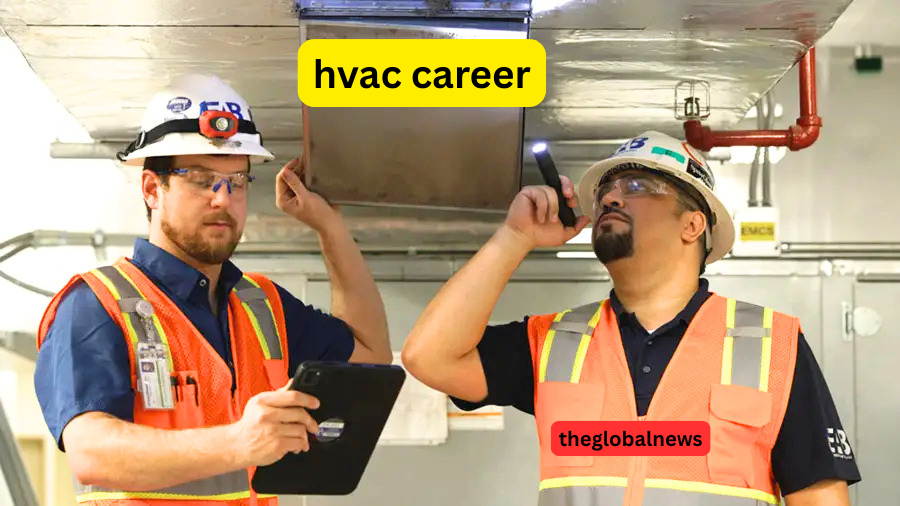
However, mechanical engineering remains the backbone of the physical world. One specialized discipline within mechanical engineering consistently experiences high global demand, robust job creation, and clear long-term career progression: HVAC (Heating, Ventilation, and Air Conditioning) engineering.
If you hold a mechanical engineering degree but are struggling to land your first core job, upskilling in HVAC technology can bridge the gap between academic theory and industry requirements, turning your degree into an employable asset.
1. The Reality of the Job Market: Why Fresh Mechanical Graduates Struggle
The struggle to land a core mechanical job rarely stems from a lack of talent or effort. Instead, it is driven by structural gaps in engineering education and industry expectations.
The Academic vs. Industry Disconnect
- Theoretical Focus: Engineering curricula emphasize foundational physics, thermodynamics, fluid mechanics, and manufacturing science. While essential, university coursework rarely covers applied building services, specialized design codes (like ASHRAE or ISHRAE), or industry-standard software.
- Lack of Project-Ready Skills: Employers on commercial construction sites, MEP (Mechanical, Electrical, Plumbing) consultancy firms, and manufacturing facilities require engineers who can read engineering drawings, calculate heat loads, select equipment, and coordinate on-site execution immediately.
- Over-Saturation in General Roles: Broad application titles like “Graduate Trainee Engineer” receive thousands of applications. Specializing in a specific domain—such as HVAC—instantly reduces competition by filtering for niche, job-ready skills.
2. What is HVAC? Understanding the Core System
HVAC stands for Heating, Ventilation, and Air Conditioning. It is the sub-discipline of mechanical engineering dedicated to controlling thermal comfort, indoor air quality, and air distribution within enclosed spaces.
Core Components of HVAC Engineering
- Heating: Maintaining optimal indoor temperatures in cold climates through boilers, furnaces, and heat pumps.
- Ventilation: Exchanging or replacing air within a space to control moisture, remove smoke, odors, heat, dust, airborne bacteria, and carbon dioxide while replenishing oxygen.
- Air Conditioning: Removing heat and controlling humidity to deliver thermal comfort in warm environments using chilled water systems, direct expansion (DX) units, or VRF/VRV technology.
- Indoor Air Quality (IAQ): Filtering airborne particulates and pollutants through specialized filtration (HEPA, MERV ratings) and dedicated outdoor air systems (DOAS).
- Energy Efficiency & Sustainability: Designing systems that minimize power consumption through variable frequency drives (VFDs), heat recovery wheels, and intelligent Building Management Systems (BMS).
3. Why Demand for HVAC Engineers is Surging Globally
HVAC is no longer treated as a luxury add-on; it is a fundamental requirement for modern infrastructure. Rapid urbanization, global warming, and stringent environmental regulations have turned HVAC into a mission-critical industry.
                      GLOBAL HVAC DEMAND DRIVERS
                                  │
       ┌──────────────────────────┼──────────────────────────┐
       ▼                          ▼                          ▼
COMMERCIAL BUILDINGS      MISSION-CRITICAL INFRA     SUSTAINABILITY & LEEDS
• Malls & Office Towers   • Data Centers             • Net-Zero Buildings
• Airports & Metro Rail   • Hospitals & Cleanrooms   • Green Building Codes
Key Drivers of Growth
- Data Center Boom: Modern cloud infrastructure, AI processing, and telecom networks generate massive thermal loads. Data centers require high-density precision cooling systems operating 24/7.
- Healthcare & Pharmaceuticals: Hospitals, surgical suites, and pharmaceutical cleanrooms require precise pressure relationships, sterile air filtration, and strict humidity controls to prevent cross-contamination.
- Aviation & Urban Transit: Modern international airports, underground metro rail stations, and high-speed rail corridors require massive centralized chilled water plants and specialized tunnel ventilation systems.
- Green Buildings & Net-Zero Mandates: International standards (LEED, IGBC, Estidama) mandate energy-efficient HVAC designs, creating high demand for engineers who understand energy modeling, heat recovery, and eco-friendly refrigerants.
4. Career Opportunities in HVAC Engineering
Specializing in HVAC opens up multiple distinct career tracks based on whether your strengths lie in design, site execution, commercial estimation, or energy auditing.
| Job Role | Typical Work & Key Responsibilities | Primary Workplace |
| HVAC Site Engineer | Oversees on-site duct installation, piping, equipment placement, and safety compliance. | Construction Sites / Infrastructure Projects |
| HVAC Project Engineer | Manages project schedules, material procurement, subcontractor teams, and client approvals. | Contracting & EPC Firms |
| HVAC Design Engineer | Performs cooling load calculations, duct sizing, pipe sizing, and equipment selection. | Engineering Consultancies & MEP Design Offices |
| HVAC Estimation Engineer | Prepares Bills of Quantities (BOQs), cost estimates, tender submissions, and vendor negotiations. | Corporate Offices & Contracting Companies |
| HVAC Sales Engineer | Handles technical product presentation, client consulting, and sales of chillers, AHUs, and VRF systems. | Equipment Manufacturers (Daikin, Carrier, Trane, Voltas) |
| Testing & Commissioning (T&C) Engineer | Verifies system performance, balances air and water flow rates, and signs off on operational handover. | Specialized Commissioning Agencies |
| Maintenance & Facility Engineer | Manages preventive maintenance, trouble-shooting, and continuous operation of large central plants. | Hospitals, Tech Parks, Malls, Airports |
| Application Engineer | Assists design consultants in selecting appropriate equipment configurations for specific building types. | Manufacturing & Distribution Firms |
| BIM HVAC Engineer | Builds 3D MEP models, performs clash detection, and generates construction drawings using Revit. | BIM Consultancies & Global Design Centers |
| Energy Auditor / Consultant | Evaluates existing HVAC installations to identify energy wastage, retrofitting needs, and operational savings. | Energy Consulting Companies |
5. Key Skills Employers Look For
To land an entry-level or junior role in HVAC, candidates must demonstrate practical proficiency in domain concepts and design software rather than generic theoretical knowledge.
Essential Technical Knowledge
- Heat Load Calculations: Mastery of heat transfer mechanisms, sensible vs. latent heat, psychrometrics, and calculation tools (E-20 sheets, HAP software).
- Duct & Pipe Design: Sizing air ducts using equal friction or static regain methods; sizing chilled water/refrigerant piping based on flow rates and pressure drops.
- Equipment Selection: Correctly specifying Air Handling Units (AHUs), Fan Coil Units (FCUs), Chillers, Cooling Towers, Pumps, and Variable Refrigerant Flow (VRF) systems.
- Codes & Standards: Familiarity with ASHRAE standards (Standard 55 for thermal comfort, Standard 62.1 for ventilation, Standard 90.1 for energy), ISHRAE guidelines, and local National Building Codes (NBC).
Core Software Tools
- AutoCAD: For 2D drafting of HVAC layouts, duct routing, piping schematics, and shop drawings.
- Autodesk Revit MEP: For 3D Building Information Modeling (BIM), multi-trade clash detection, and parametric modeling.
- Hourly Analysis Program (HAP) / Trace 700: Industry-standard thermal software for building heat load calculations and energy analysis.
- MS Excel: Essential for preparing load sheets, BOQs, duct sizing tables, and cost comparisons.
ALSO READ : https://theglobalnews.in/preeti-pawar-assures-india-of-cwg-2026-medal-now-eyes-historic-womens-54kg-gold/
. https://theglobalnews.in/south-korean-actor-jeon-seung-jae-passes-away-at-46-after-two-year-coma/
6. A Day in the Life of an HVAC Engineer
Understanding the daily work routines helps mechanical engineering graduates determine which sub-track matches their personal strengths.
The Design Engineer
A typical day begins in an engineering office setting. The design engineer reviews architectural floor plans, inputs wall insulation and glazing values into heat load software (HAP), calculates CFM requirements for each zone, sizes ductwork using digital ductulators, and drafts layout drawings in AutoCAD or Revit MEP.
The Site Execution Engineer
A day on-site involves conducting morning tool-box safety meetings, inspecting ongoing duct fabrication and insulation quality, checking chilled water pipe pressure testing, coordinating with electrical and plumbing supervisors to clear overhead space clashes, and documenting daily progress reports.
7. Career Progression and 10-Year Growth Timeline
The HVAC sector offers a structured, transparent path for professional advancement:
Graduate Trainee / Junior Engineer (Years 0–2)
                     │
                     ▼
HVAC Site / Design / Project Engineer (Years 2–4)
                     │
                     ▼
Senior HVAC Engineer (Years 4–7)
                     │
                     ▼
Assistant Project Manager / Lead Design Engineer (Years 7–10)
                     │
                     ▼
MEP Project Manager / General Manager / Operations Head (Years 10+)
What Changes Over 10 Years?
During the first two years, engineers focus heavily on technical execution—drafting layouts, sizing components, and supervising site work. By years 4–7, the focus shifts toward managing vendor contracts, client meetings, and multi-trade coordination. Beyond 10 years, senior professionals oversee entire MEP project divisions, managing multi-crore budgets, corporate strategy, and business development.
8. Realistic Salary Expectations (India vs. Gulf Region)
Salary structures in HVAC engineering vary significantly depending on entry point, location, project scale, and technical certifications.
Salary Outlook in India
- Fresh Graduate / Entry-Level (0–2 years): ₹2.4 Lakhs to ₹4.5 Lakhs per annum (LPA) in site execution, contracting, or entry-level drafting roles.
- Mid-Level Engineers (3–6 years): ₹5.0 Lakhs to ₹9.0 LPA for experienced design, estimation, or site project engineers.
- Senior Engineers / Team Leads (7–10 years): ₹10.0 Lakhs to ₹18.0 LPA in specialized BIM consultancy, major contracting, or multinational equipment manufacturers.
- MEP Managers / Heads (10+ years): ₹20.0 Lakhs to ₹35+ LPA overseeing major commercial projects or corporate MEP divisions.
Salary Outlook in the Gulf Region (UAE, Saudi Arabia, Qatar, Oman)
The Gulf Cooperation Council (GCC) region remains one of the largest global employers of Indian HVAC engineers due to ongoing high-volume infrastructure development and extreme ambient cooling requirements.
- Junior Engineers (0–3 years local/home experience): AED 3,500 to 6,000 / SAR 4,000 to 7,000 per month (approx. ₹90,000 to ₹1.6 Lakhs per month).
- Mid-Level Engineers (4–8 years): AED 7,000 to 14,000 / SAR 8,000 to 15,000 per month.
- Senior MEP / Project Managers: AED 18,000 to 30,000+ per month, often accompanied by family housing, transport allowances, and annual flights.
9. India vs. Gulf Opportunities: A Balanced Comparison
Choosing where to build an HVAC career depends on individual career goals, family priorities, and exposure requirements.
| Parameters | Opportunities in India | Opportunities in the Gulf Region |
| Project Nature | High growth in Data Centers, Metro Rail, Smart Cities, Pharma, and Residential High-Rises. | Mega-infrastructure, giga-projects (smart cities, high-density luxury towers, massive airport expansions). |
| Primary Skill Demand | High demand for Revit MEP / BIM design, heat load software expertise, and energy auditing. | High demand for site execution, testing & commissioning, large central chilled water plant management, and NFPA safety standards. |
| Living & Work Environment | Proximity to home, long-term stability, growing domestic commercial market. | Tax-free income potential, multicultural work environment, faster early capital accumulation. |
| Career Entry Point | Easier to gain initial 2–3 years of design or site experience as a fresher. | Prefers candidates with 2–4 years of verified home-country project experience before recruitment. |
10. Industry Sectors Actively Hiring HVAC Engineers
Because thermal regulation and ventilation are universal needs, HVAC engineers enjoy career mobility across diverse industries:
- Commercial Real Estate & Infrastructure: High-rise office parks, shopping malls, hotel chains, and residential towers.
- Data Center Infrastructure: Companies building hyperscale data facilities require specialized precision cooling engineers.
- Healthcare & Life Sciences: Hospitals, diagnostic laboratories, and pharmaceutical manufacturing plants.
- Aviation, Rail & Ports: Terminal building ventilation, underground metro station cooling, and tunnel ventilation.
- Industrial & Manufacturing Facilities: Automotive plants, textile mills, cleanrooms, and chemical processing facilities.
- MEP Contracting & EPC Companies: Direct turnkey project installation and execution contractors.
- Facility Management Companies (IFM): Managing daily operations and maintenance for existing large-scale commercial assets.
11. Recommended Beginner Learning Roadmap (First 6–12 Months)
To transition successfully from a general mechanical graduate to an employable HVAC professional, follow a structured 4-phase learning plan:
Phase 1: Foundation Building (Months 1–2)
- Revisit basic thermodynamics, heat transfer principles, and fluid mechanics from your degree syllabus.
- Study fundamental psychrometrics—understand dry bulb temperature, wet bulb temperature, relative humidity, and dew point using a psychrometric chart.
- Download and study basic ASHRAE and ISHRAE technical handbooks.
Phase 2: Software Mastery & Drafting (Months 3–4)
- Master 2D drafting in AutoCAD: learn architectural plan overlay, duct layout drafting, piping schematics, and legend preparation.
- Practice manual heat load calculations using standard Excel templates before transitioning to software tools.
Phase 3: Advanced Software & Design Tools (Months 5–8)
- Learn HAP (Hourly Analysis Program) or Trace 700 to perform automated building heat load calculations.
- Enroll in Autodesk Revit MEP training to learn 3D modeling, family creation, duct/pipe routing, and clash detection.
- Practice sizing ducts, grilles, diffusers, and chilled water pumps using industry design tables.
Phase 4: Job Application & Interview Prep (Months 9–12)
- Build a portfolio containing 2–3 complete design projects (e.g., HVAC layout for a 3-story commercial office or hospital floor plan).
- Apply for roles as a Junior Design Engineer, Site Trainee, or BIM Modeler across MEP contractors and consultancies.
12. Real Project Profiles: Understanding Different HVAC Applications
HVAC design differs significantly based on the target facility:
1. Data Center Precision Cooling
Unlike standard comfort cooling for offices, data centers require sensible cooling operating continuously (24/7/365). They utilize Computer Room Air Handler (CRAH) units, hot aisle/cold aisle containment, and liquid cooling systems to handle heat loads generated by dense server racks.
2. Hospital Operating Theaters & Isolation Rooms
Focuses heavily on air hygiene and pressure control. Positive pressure is maintained in operating rooms to prevent unfiltered corridor air from entering, while negative pressure is used in airborne infection isolation rooms to prevent contagions from escaping. High-efficiency HEPA filters (99.97% rating) are mandatory.
3. Shopping Malls & Commercial Towers
Utilizes large centralized chilled water plants containing water-cooled centrifugal or screw chillers, primary/secondary pumping systems, cooling towers, and dedicated Air Handling Units (AHUs) per floor or zone.
13. Top Software Every HVAC Engineer Should Learn
                              HVAC SOFTWARE STACK
                                       │
         ┌─────────────────────────────┼─────────────────────────────┐
         ▼                             ▼                             ▼
   CALCULATION TOOLS             DRAFTING & BIM               SIMULATION & ENERGY
 • Carrier HAP                 • Autodesk AutoCAD           • EnergyPlus
 • Trane Trace 700             • Autodesk Revit MEP         • IES VE
 • McQuay Pipe/Duct Sizer      • Navisworks (Clash Check)   • ANSYS CFD (Specialized)
- Carrier HAP / Trane Trace 700: For peak load calculation, system selection, and energy modeling.
- Autodesk AutoCAD: Essential for 2D shop drawings, single-line diagrams, and site execution plans.
- Autodesk Revit MEP: Industry-standard BIM tool for 3D modeling, parametric component creation, and multi-trade coordination.
- Navisworks: Used by BIM engineers to perform clash detection between HVAC ducts, electrical cable trays, and plumbing pipes.
- Duct Checker & Pipe Sizer: Lightweight calculation utilities used for fast sizing on-site or during initial conceptual design.
14. Recommended Certifications
While a degree gets your foot in the door, industry-recognized certifications accelerate growth and open international doors:
- ASHRAE Certifications:
- Certified HVAC Designer (CHD): Validates competence in system design, load calculations, and equipment selection.
- High-Performance Building Design Professional (HBDP): Focuses on green building design and energy efficiency.
- Autodesk Certified Professional (Revit MEP / AutoCAD): Proves technical competency in industry-standard design tools.
- LEED Accredited Professional (LEED AP BD+C): Highly valued for green building projects globally.
- ISHRAE Certified HVAC Professional (ICHP): Recognized across India for technical competence in MEP services.
15. Future Trends Reshaping the HVAC Industry
- Smart Buildings & IoT: HVAC systems are increasingly integrated with smart sensors, cloud analytics, and AI algorithms that dynamically adjust cooling output based on real-time room occupancy.
- Variable Refrigerant Flow (VRF) Expansion: VRF/VRV systems are replacing traditional packaged units in medium-scale commercial developments due to their superior part-load energy efficiency and individual zone control.
- Heat Pumps & Decarbonization: As nations transition away from fossil-fuel heating, electric heat pumps and hybrid systems are becoming standard in industrial and commercial heating applications.
- Green Refrigerants: Phase-out of high-GWP (Global Warming Potential) hydrofluorocarbons (HFCs) in favor of eco-friendly low-GWP refrigerants (R-32, R-454B, natural refrigerants like CO2 and ammonia).
16. Common Mistakes Fresh Graduates Make (and How to Avoid Them)
- Waiting for the “Perfect” Desk Job: Many freshers reject site engineering roles while waiting exclusively for design positions. Site experience provides invaluable practical knowledge about how ducts, dampers, and piping are actually installed—knowledge that makes you a far superior design engineer later.
- Ignoring Drafting Tools: Assuming that a mechanical engineer only needs to do calculations. In reality, being able to draft clean, accurate 2D and 3D layouts in AutoCAD or Revit is the fastest way to get hired as a fresher.
- Neglecting Soft Skills: Communication, client management, and clear technical documentation are critical for advancing into project management and sales engineering roles.
17. Interview Preparation Tips for Freshers
When interviewing for entry-level HVAC positions, focus on mastering these foundational technical concepts:
- Explain the Vapor Compression Refrigeration Cycle (VCRC): Be ready to draw and explain the four basic components (Compressor, Condenser, Expansion Valve, Evaporator) and sketch the cycle on a $P\text{-}h$ (Pressure-Enthalpy) diagram.
- Sensible vs. Latent Heat: Define sensible heat (temperature change without phase change) and latent heat (phase change at constant temperature), giving real-world HVAC examples for each.
- Primary vs. Secondary Pumping Systems: Understand how constant primary / variable secondary chilled water pumping circuits operate in large central cooling plants.
- Duct Sizing Methods: Be prepared to explain the Equal Friction Method and Static Regain Method.
- Demonstrate Portfolio Projects: Bring printed or digital copies of CAD layouts or HAP calculation reports you created during self-learning or training programs. Demonstrating completed work instantly sets you apart from candidates who only offer academic theory.
Frequently Asked Questions (FAQ)
Can a mechanical engineer become an HVAC engineer?
Yes. Mechanical engineering is the ideal academic foundation for HVAC engineering. Your degree provides background in thermodynamics, fluid mechanics, and heat transfer—the core scientific principles behind all heating and cooling systems.
Is HVAC a good career choice in India?
Yes. Rapid urban development, expanding commercial real estate, data center investments, metro rail projects, and green building mandates create sustained demand for qualified HVAC design, project, and sales engineers across India.
Is HVAC in high demand in Gulf countries?
Extremely high. Extreme ambient temperatures in Middle Eastern nations make advanced HVAC systems a mandatory component of all residential, commercial, and industrial infrastructure. Thousands of Indian HVAC engineers work across the GCC region.
What software should a beginner learn first?
Begin with 2D drafting in Autodesk AutoCAD, followed by heat load software such as Carrier HAP. Once comfortable with 2D layouts and thermal calculations, upgrade to Autodesk Revit MEP for 3D Building Information Modeling (BIM).
Does HVAC engineering require software coding or programming?
Standard HVAC design, site execution, and estimation roles do not require coding. However, basic knowledge of logic control or scripting can be useful if you choose to specialize later in Building Automation Systems (BAS) or Building Management Systems (BMS).
Can freshers get HVAC jobs without prior experience?
Yes. Freshers who proactively learn practical skills—such as AutoCAD drafting, manual/HAP heat load calculations, and duct sizing—and present a project portfolio can readily secure entry-level site engineer, junior designer, or estimation roles.
Which certifications are most helpful for career growth?
For domestic and global recognition, certifications from ASHRAE (such as Certified HVAC Designer), Autodesk (Revit MEP Professional), and LEED AP provide significant career and salary leverage.


- Mechanical Engineers in Oil & Gas: Why Aramco Experience, Site Skills and Driving Can Boost Your Career in 2026
- Aamir Khan and Sunny Deol Join Amitabh Bachchan for KBC 18 Premiere: Here’s What to Expect
- Sarfaraz Khan’s India Test Hopes Reopen After Sai Sudharsan’s Injury
- Mumbai Police Constable Guarding Salman Khan’s Residence Dies of Suspected Heart Attack
- Consumer Affairs Victoria Launches Bid to Shut Down Panda Mart Stores









Leave a Reply