

Taiwan’s west coast high-speed rail corridor—often described as the backbone of the nation’s “Silicon Island”—is undergoing its most significant rolling stock upgrade in nearly two decades. As passenger demand skyrockets beyond pre-pandemic records, Taiwan High Speed Rail Corporation (THSRC) is bringing next-generation Japanese bullet train technology to its network.
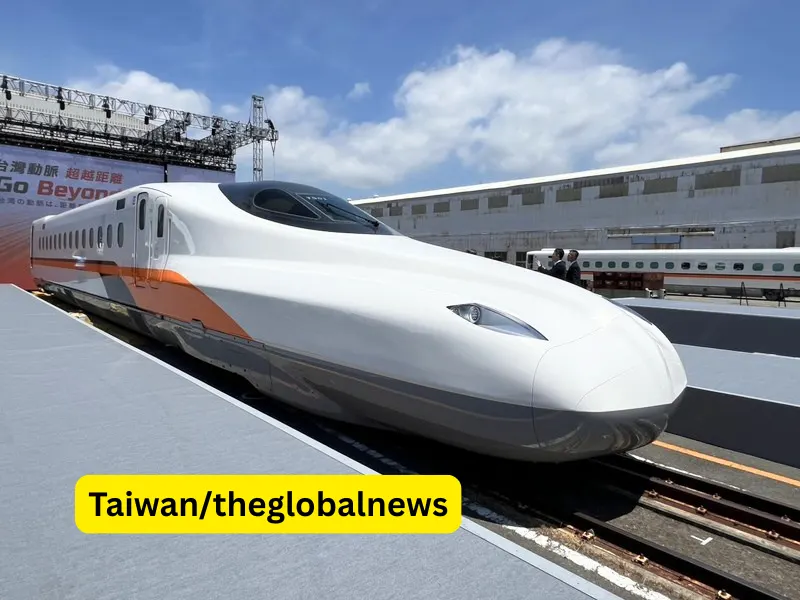
The first set of N700ST bullet trains—custom-built for Taiwan based on Japan’s flagship N700S Shinkansen—has officially rolled off the assembly line at Hitachi’s Kasado Works in Yamaguchi Prefecture. Here is a comprehensive look at why Taiwan invested in these trains, what makes the N700ST unique, and how it will transform regional travel.
1. Why This Matters: Soaring Demand on Taiwan’s Rail Backbone
Since its launch in 2007, the Taiwan High Speed Rail (THSR) network linking Taipei in the north to Kaohsiung in the south has served over 1.03 billion passenger trips. Daily passenger volume has grown more than fivefold since operations began, reflecting intense reliance on the high-speed line by business commuters, tourists, and tech sector professionals traveling across Taiwan’s major industrial hubs.
This rapid rise in ridership has pushed the current fleet toward peak capacity during weekends and holidays. To relieve bottlenecking without altering physical track infrastructure, THSRC required modern rolling stock capable of providing higher service frequency, lower energy consumption, and increased passenger throughput.
- Capacity Expansion: Adding the new fleet will enable THSRC to scale its schedule from 1,134 weekly train services up to 1,400 services.
- Peak Hour Relief: The addition of 12 new trainsets will boost peak-hour transport capacity by approximately 25%.
- Economic Mobility: Fast, reliable connections directly support Taiwan’s Western Corridor economic engine, where high-tech and semiconductor industries have expanded exponentially over the past two decades.
2. What is the N700ST?
The N700ST (“ST” standing for Shinkansen Taiwan) is a customized, 12-car export variant of Central Japan Railway Company’s (JR Central) N700S (“Supreme”) Shinkansen, which entered service in Japan in July 2020.
While sharing the advanced core platform of its Japanese counterpart, the N700ST has been tailored specifically to operate under Taiwan’s climatic conditions, power systems, and passenger preferences.
3. Key Specifications
In May 2023, THSRC officially awarded the rolling stock contract worth approximately ¥124 billion (NT$28.5 billion) to the Hitachi-Toshiba Supreme Consortium (HTSC).
| Feature | Details |
| Train Model | N700ST (Based on Japan’s N700S platform) |
| Manufacturer | Hitachi-Toshiba Supreme Consortium (HTSC) |
| Number of Trainsets | 12 complete trainsets |
| Total Cars | 144 carriages (12 cars per set) |
| Operating Speed | Up to 300 km/h (186 mph) |
| Capacity Increase | ~25% boost in peak-hour throughput |
| Expected Service | Testing 2026–2027; Passenger revenue service 2027–2028 |
4. Why Taiwan Chose Japanese Shinkansen Technology
Taiwan’s decision to continue its partnership with Japanese high-speed rail manufacturers relies on a proven 20-year track record:
- Unrivaled Safety Record: Operating since 2007, Taiwan High Speed Rail has logged over 1.03 billion trips with a zero passenger casualty record and an average operational punctuality rate exceeding 99.5%.
- Infrastructure Compatibility: THSRC’s existing signaling systems, track gauge, overhead catenary power, and maintenance depots were built around Japanese high-speed rail standards (specifically the 700T series derived from the 700 Series Shinkansen). Adopting the N700S platform ensures seamless integration.
- Earthquake Resilience: Japan’s Shinkansen technology is engineered specifically for active seismic zones—a critical requirement for Taiwan, which experiences frequent earthquake activity.
5. Passenger Benefits & Interior Upgrades
Beyond technical efficiency, the N700ST introduces several noticeable upgrades for daily passengers and long-distance travelers:
- More Frequent Departures: Reduced wait times at stations thanks to the expanding weekly timetable (increasing to 1,400 trips per week).
- Universal Power Access: AC power outlets are available at every seat across both Standard Class and Business Class carriages.
- Rider Comfort: Fully active suspension systems work continuously to suppress lateral vibration, delivering a noticeably smoother ride at 300 km/h.
- Modernized Displays: Interior cabins feature dual-tier, full-color LCD screens displaying real-time trip information, next-stop alerts, and safety notices.
- Expanded Luggage Capacity: Reconfigured car interiors provide double-deck luggage racks to accommodate large suitcases.
- Enhanced Accessibility: Dedicated family-friendly facilities, nursing rooms with washbasins, baby seats, and six dedicated wheelchair spaces equipped with restraint systems.
6. Advanced Technology & Engineering Highlights
The N700ST incorporates engineering solutions refined on Japan’s busiest high-speed line, the Tokaido Shinkansen:
Aerodynamic “Dual Supreme Wing” Design
The distinctive nose cone shape reduces air resistance and mitigates the severe pressure wave (“tunnel boom”) that occurs when entering tunnels at high speeds. This lowers external noise pollution and reduces cabin pressure fluctuations for passengers.
Energy-Saving Silicon Carbide (SiC) Power Electronics
The drive system utilizes silicon carbide (SiC) power devices combined with a blower-less cooling design. This layout makes the underfloor drive equipment smaller, significantly lighter, and roughly 7% more energy-efficient than older train generations.
Emergency Battery Self-Propulsion
Underfloor-mounted Toshiba SCiB™ lithium-ion batteries allow the train to self-propel at low speeds during power grid outages. In an emergency or natural disaster, the train can move itself out of tunnels or off elevated bridges to a safe evacuation point while keeping cabin lighting and restrooms functional.
7. Economic Impact Across Taiwan
The procurement of the N700ST fleet represents a strategic infrastructure investment valued at ¥124 billion.
- Industrial Logistics: By connecting Taiwan’s northern political capital (Taipei) with southern tech manufacturing hubs (Hsinchu, Tainan, Kaohsiung), faster and more frequent services support high-tech supply chains.
- Tourism & Regional Business: Increased seat availability during peak travel periods will boost domestic tourism and business travel, ensuring reliable transit between major metropolitan areas.
8. Rollout Timeline
The delivery, testing, and operational deployment follows a structured multi-year roadmap:
  2023        May: Contract officially awarded to Hitachi-Toshiba Supreme Consortium (HTSC).
   │
  2026        July/August: First N700ST trainset completed and shipped from Japan to Taiwan.
   │
2026–2027     Comprehensive dynamic safety testing, track integration, and signaling validation.
   │
  2027        July 1: Scheduled entry into official commercial passenger service.
   │
  2028        September: Final delivery of all 12 trainsets; full timetable adjustments completed.
9. Comparing Old vs. New: 700T vs. N700ST
Taiwan’s current high-speed fleet consists of 34 sets of the 700T series, which were manufactured between 2004 and 2015 based on technology from the late 1990s. Here is how the new fleet compares:
| Feature | Existing 700T Fleet | Next-Gen N700ST Fleet |
| Base Platform | 700 Series Shinkansen (1990s technology) | N700S Series “Supreme” (2020s technology) |
| Power Semiconductors | Silicon GTO/IGBT inverters | Compact Silicon Carbide (SiC) devices |
| Emergency Power | Auxiliary battery for essential lights only | SCiB™ battery self-propulsion out of dangerous zones |
| Power Outlets | Limited outlets in Business Class | AC power outlets at every passenger seat |
| Passenger Information | Single-color LED scrolling displays | Full-color dual LCD information screens |
| Ride Control | Semi-active suspension system | Fully active suspension & advanced damping control |
10. Future Outlook for Taiwan’s Rail Transport
The introduction of the N700ST fleet forms part of Taiwan’s broader long-term transportation master plan. As the new trains enter service, THSRC plans a comprehensive revision of its timetable to optimize express vs. local high-speed services.
Furthermore, Taiwanese transport authorities are evaluating official proposals to extend the high-speed rail line further north to Yilan and further south to Pingtung. The added capacity provided by the 144 new N700ST carriages ensures that the network has the operational bandwidth required to support these future territorial expansions over the next decade.
Frequently Asked Questions (FAQs)
What is the N700ST bullet train?
The N700ST is a modern 12-car high-speed electric multiple unit (EMU) built for Taiwan High Speed Rail. It is customized based on Japan’s latest N700S “Supreme” Shinkansen platform.
Why is Taiwan buying new bullet trains?
Passenger demand on Taiwan’s high-speed rail line has increased more than fivefold since 2007. The new fleet is required to expand weekly service trips, relieve peak-hour congestion, and increase overall network capacity by 25%.
When will the new N700ST trains enter passenger service?
The first trainset arrived in Taiwan for testing in mid-2026, with official revenue passenger service scheduled to begin on July 1, 2027. All 12 trainsets are expected to be operational by September 2028.
Who manufactures Taiwan’s new high-speed trains?
The trains are manufactured in Japan by the Hitachi-Toshiba Supreme Consortium (HTSC), with primary carriage assembly taking place at Hitachi’s Kasado Works in Yamaguchi Prefecture.
How will passengers benefit from the N700ST?
Passengers will benefit from more frequent departures (up to 1,400 trips per week), power outlets at every seat, full-color LCD information displays, smoother ride stability due to active suspension, larger luggage storage racks, and enhanced accessibility facilities.

- Mechanical Engineers in Oil & Gas: Why Aramco Experience, Site Skills and Driving Can Boost Your Career in 2026
- Aamir Khan and Sunny Deol Join Amitabh Bachchan for KBC 18 Premiere: Here’s What to Expect
- Sarfaraz Khan’s India Test Hopes Reopen After Sai Sudharsan’s Injury
- Mumbai Police Constable Guarding Salman Khan’s Residence Dies of Suspected Heart Attack
- Consumer Affairs Victoria Launches Bid to Shut Down Panda Mart Stores







Leave a Reply